



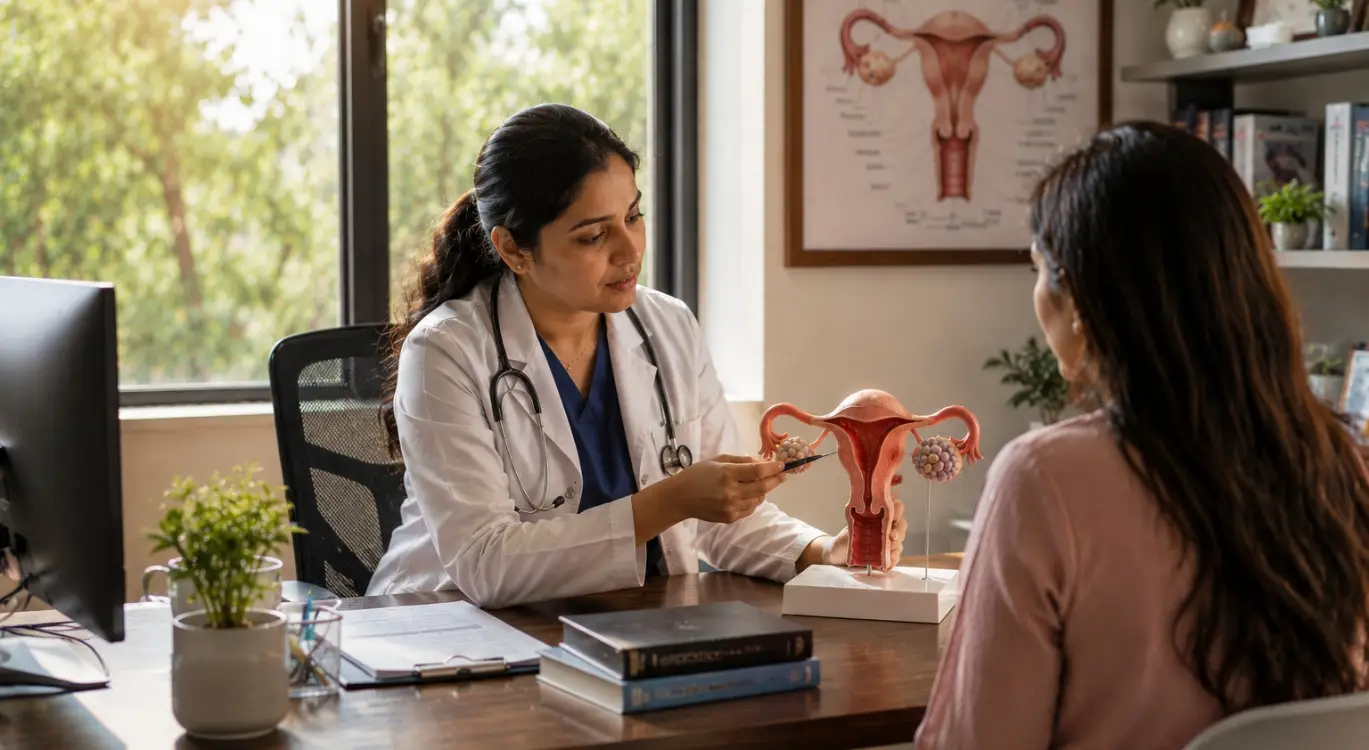
Ovarian hyperstimulation syndrome (OHSS) is an excessive response of the ovaries to fertility medications, most commonly seen during IVF or egg freezing cycles, where the ovaries swell and may leak fluid into the body. Most cases are mild and resolve on their own, but for individuals and couples going through treatment, knowing the early signs, understanding how severity is graded, and having a clear picture of what recovery looks like can make a real difference.
Here is a simple, clear guide to help you spot early warning signs and know when to reach out to your doctor.
What is ovarian hyperstimulation syndrome?
Ovarian hyperstimulation syndrome is an excessive response of the ovaries to fertility medications, particularly injectable hormones called gonadotropins used during IVF or egg freezing cycles. When the ovaries respond too strongly to stimulation, they swell up and may release chemicals that cause fluid to leak from blood vessels into the abdomen and, in rare cases, other parts of the body.
Why does it happen?
During a typical stimulation cycle, the goal is to encourage multiple follicles to grow so that more eggs can be collected. Sometimes the ovaries produce more follicles than expected. A trigger injection, usually containing hCG (human chorionic gonadotropin), is given to help the eggs mature before retrieval. In some individuals, hCG can cause the ovaries to overreact, leading to OHSS. If you are preparing for injections and feeling anxious about the process, practical tips for managing IVF shots can help.
OHSS after IVF or egg retrieval usually shows up within a few days of the trigger shot or egg collection. If pregnancy occurs in that cycle, the body produces its own hCG, which can make symptoms last longer or get worse.
Who is more likely to develop OHSS?
Not everyone undergoing fertility treatment will develop ovarian hyperstimulation syndrome. Certain factors may increase the likelihood:
- Polycystic ovary syndrome (PCOS) is one of the strongest risk factors
- Younger age, generally under 30
- Low body weight or low BMI
- High AMH (Anti-Mullerian Hormone) levels, which suggest a larger number of resting follicles
- A previous episode of OHSS
- A high number of follicles are developing during stimulation
(Source: Mayo Clinic; Source: ASRM Prevention Guidelines, 2023)
Women with PCOS are at a particularly elevated risk because their ovaries tend to have a higher antral follicle count, which means more follicles may respond to stimulation at once. A thorough female fertility assessment before starting treatment can help your doctor identify these risk factors early and plan accordingly.
Early signs and OHSS symptoms to watch for
Catching OHSS symptoms early can make a significant difference in how the condition is managed. Most OHSS symptoms begin within a few days after the trigger injection or egg retrieval.
Mild OHSS symptoms
Mild ovarian hyperstimulation syndrome is the most common form and may include:
- Mild bloating or abdominal fullness
- Slight discomfort or tenderness in the lower belly
- Mild nausea
- Slight weight gain from fluid retention
Many women experience some degree of these symptoms during stimulation, and mild OHSS often resolves on its own within a week or two.
Moderate OHSS symptoms
When symptoms move beyond mild discomfort, moderate OHSS may involve:
- Increased abdominal bloating and tightness
- Nausea that may include vomiting or diarrhoea
- Noticeable weight gain over a short period
- Reduced urine output
- Ultrasound showing fluid buildup (ascites) in the abdomen
Severe OHSS symptoms
Severe ovarian hyperstimulation syndrome is rare but requires urgent medical attention. Signs may include:
- Rapid weight gain
- Severe abdominal pain and significant swelling
- Difficulty breathing or shortness of breath
- Very low urine output
- Dizziness, rapid heartbeat, or feeling faint
- Nausea and vomiting that do not respond to basic measures
(Source: Cleveland Clinic; Source: NIH/PMC)
If you notice any of these severe symptoms during or after your IVF cycle, contact your fertility clinic or visit a hospital immediately.
How is OHSS severity graded?
Doctors classify ovarian hyperstimulation syndrome into grades based on symptom severity, ultrasound findings, and blood work. A commonly used grading system breaks it down as follows:
Grade 1 (mild)
Abdominal discomfort and bloating. Ovaries may be slightly enlarged. No significant lab abnormalities.
Grade 2 (mild)
Grade 1 features plus nausea, vomiting, or diarrhoea. Ovarian enlargement may be more noticeable, generally between 5 to 12 cm.
Grade 3 (moderate)
Features of mild OHSS, along with ultrasound evidence of fluid in the abdomen (ascites). Ovarian size may increase further.
Grade 4 (severe)
Features of moderate OHSS include clinically visible ascites, difficulty breathing, and lab changes such as increased blood concentration (elevated haematocrit).
Grade 5 (critical)
All features of severe OHSS, along with significant fluid around the lungs, severely reduced kidney function, and potential blood clotting complications. Hospitalisation and intensive monitoring become necessary.
Mild OHSS after IVF may affect roughly 20 to 33 percent of stimulation cycles. Moderate to severe forms are far less common. Estimates vary depending on how clinics define and classify OHSS, but moderate OHSS may occur in around 3 to 6 percent of cycles, and severe OHSS in less than 3 percent. (Source: ISUOG; Source: NIH/PMC)
What does OHSS recovery look like?
Recovery from ovarian hyperstimulation syndrome depends largely on how severe the condition is and whether pregnancy occurs in the same cycle.
Mild OHSS recovery
Most mild cases resolve within one to two weeks without any specific medical treatment. Symptoms tend to ease once your next menstrual period starts.
Moderate OHSS recovery
Moderate cases may take up to two weeks to settle. Your doctor may recommend rest, careful fluid intake, and regular monitoring of your weight and symptoms.
Severe OHSS recovery
Severe cases may require hospitalisation. Recovery can take several weeks. In a study of hospitalised patients with severe OHSS, the median recovery time was around 8 to 10 days, and pregnant patients tended to take longer to recover. (Source: NIH/PMC)
What helps during recovery
A few practical things that may support recovery:
- Staying well hydrated, preferably with electrolyte-rich fluids as your doctor advises
- Avoiding vigorous physical activity or heavy exercise
- Weighing yourself daily and tracking any rapid changes
- Keeping your doctor informed about your symptoms, especially if they worsen
- Using mild pain relief as recommended by your clinic
- Asking your partner or a trusted person to help with daily monitoring and clinic communication during recovery
OHSS is generally considered a self-limiting condition, meaning the body tends to resolve it over time. Treatment is focused on managing symptoms and preventing complications rather than curing the condition itself. In rare cases, severe OHSS can lead to serious complications, which is why medical monitoring matters. (Source: Medscape)
Once you have recovered, your fertility specialist can discuss what comes next. For those considering another cycle, reading about back-to-back IVF cycles and what to consider may be helpful.
How can the risk of OHSS be reduced?
Modern fertility care has come a long way in reducing OHSS risk. Several strategies are now standard practice at experienced clinics.
Personalised stimulation protocols
One of the most effective ways to lower OHSS risk is to tailor fertility medication doses to each individual rather than following a fixed protocol. A personalised IVF protocol takes into account AMH levels, body weight, age, and previous responses to medication. Starting with a lower dose and adjusting based on how the ovaries respond helps prevent an excessive reaction.
Choosing safer trigger options
Using a GnRH agonist trigger instead of hCG for final egg maturation can significantly reduce OHSS risk in high-risk individuals. Multiple studies and guidelines support this approach, particularly when combined with a freeze-all strategy where embryos are frozen and transferred in a later cycle. (Source: ASRM Prevention Guidelines, 2023; Source: Frontiers in Endocrinology)
Close monitoring throughout the cycle
Frequent ultrasound scans and blood tests during stimulation allow doctors to spot early signs of an excessive response. If too many follicles are developing or hormone levels are rising too quickly, medication doses can be adjusted, the trigger can be delayed, or the cycle can be modified to keep things safe.
Freeze-all approach
For individuals at high risk, freezing all embryos and planning a transfer in a later cycle removes the added hormonal load of early pregnancy, which can otherwise worsen OHSS. Egg freezing follows a similar principle, as there is no embryo transfer in the same cycle, which naturally lowers the risk of late-onset OHSS. If your doctor recommends multiple retrieval cycles, understanding the pros and cons of back-to-back egg retrievals can help you plan ahead.
When should you call your doctor?
After egg retrieval or any ovarian stimulation procedure, some mild discomfort is expected. However, you should reach out to your fertility clinic if:
- Bloating or pain is getting worse rather than better
- You notice rapid weight gain
- Urine output drops noticeably
- You feel short of breath or have chest discomfort
- Nausea and vomiting become persistent
Early reporting of OHSS symptoms allows your medical team to step in before the condition progresses. Do not wait for symptoms to become severe.
Conclusion
Ovarian hyperstimulation syndrome is a well-recognised side effect of fertility treatment, but most cases are mild and manageable. Knowing the early signs, understanding the severity grades, and having a recovery plan in place can take away much of the uncertainty. One of the most important steps in reducing OHSS risk is working with a clinic that tailors treatment to your individual biology rather than following a one-size-fits-all approach.
At Luma Fertility, we personalise every IVF and egg freezing protocol based on your unique hormonal profile, ovarian reserve, and response patterns. Whether you are starting your pre-conception journey or wondering how many IVF cycles you may need, our goal is always to keep treatment safe, effective, and centred around you.
Book a consultation with our fertility care specialist
Note: This blog is for educational and informational purposes only. The information provided here is not a substitute for professional medical advice, diagnosis, or treatment. Always consult a qualified fertility specialist for guidance tailored to your individual situation.
FAQs
What is ovarian hyperstimulation syndrome?
Ovarian hyperstimulation syndrome is an excessive response of the ovaries to fertility medications used during IVF or egg freezing. The ovaries swell and may leak fluid into the abdomen. Most cases are mild and resolve within one to two weeks.
Can OHSS happen after egg retrieval?
Yes. OHSS after IVF or egg retrieval typically develops within a few days of the trigger injection or egg collection. If pregnancy occurs in the same cycle, symptoms may last longer because the body produces additional hCG.
What are the most common OHSS symptoms?
Common OHSS symptoms include abdominal bloating, nausea, mild weight gain, and lower belly discomfort. In more severe cases, rapid weight gain, difficulty breathing, and reduced urine output may occur. Any worsening symptoms should be reported to your clinic.
How long does it take to recover from OHSS?
Mild cases usually resolve in one to two weeks. Moderate cases may take up to two weeks. Severe OHSS can require hospitalisation and may take several weeks to fully resolve, especially if pregnancy has occurred.
Does OHSS affect egg quality or future fertility?
OHSS does not typically damage the ovaries or affect long-term fertility. Available evidence on egg quality is mixed. Some studies suggest that while more eggs may be retrieved, the proportion of fully mature, high-quality eggs may be slightly lower. However, embryo quality and pregnancy rates appear to remain comparable in most cases. Your fertility specialist can guide you based on your individual situation.
Can OHSS be prevented during IVF?
OHSS risk can be significantly reduced through personalised medication dosing, safer trigger options like GnRH agonist triggers, close cycle monitoring, and freeze-all strategies. Working with a clinic that tailors treatment to your individual biology is one of the most effective ways to lower the risk.
Sources:
- Mayo Clinic. “Ovarian hyperstimulation syndrome (OHSS) – Symptoms & causes.” mayoclinic.org
- Cleveland Clinic. “Ovarian Hyperstimulation Syndrome (OHSS): Causes & Treatment.” my.clevelandclinic.org
- Prakash A, Mathur R. “Ovarian hyperstimulation syndrome.” NIH/PMC. pmc.ncbi.nlm.nih.gov
- ASRM Practice Committee. “Prevention of moderate and severe ovarian hyperstimulation syndrome: a guideline (2023).” asrm.org
- ISUOG. “Ovarian hyperstimulation syndrome (OHSS) – Patient Information.” isuog.org
- Todorovic et al. “Predictive factors for recovery time in patients suffering from severe OHSS.” NIH/PMC. ncbi.nlm.nih.gov
- Whelan S, Ledger WL. “Minimising OHSS in women with PCOS.” Frontiers in Endocrinology. frontiersin.org
- Medscape. “Ovarian Hyperstimulation Syndrome Treatment & Management.” emedicine.medscape.com