




Deciding to get your fertility tested can bring up a mix of questions and, sometimes, a fair amount of uncertainty. You might be wondering whether the right time has come, or whether you even need testing at all. Maybe you have been trying for a while and want answers. Maybe you are planning ahead and simply want to understand where things stand. Whatever brought you here, your questions are valid, and getting clarity does not have to feel overwhelming.
A female fertility test can offer real, personalised answers. A female fertility assessment is not a single test but a combination of blood work, scans, and sometimes minor procedures. Knowing what female infertility tests check for, and what the results mean, can help you walk into your appointment feeling prepared rather than anxious.
Key takeaways
- A female fertility assessment looks at hormones, ovarian reserve, uterine health, and tubal function.
- AMH and antral follicle count are two of the most widely used markers for estimating egg reserve.
- Hormone tests for fertility are typically drawn on specific days of your menstrual cycle for accuracy.
- Ultrasound assessments check for structural concerns like fibroids, polyps, or ovarian cysts.
- Early testing may be especially helpful if you plan to delay conception, have irregular cycles, or are over 35.
- Most fertility tests for women are straightforward, minimally uncomfortable, and done on an outpatient basis.
Who should consider fertility testing?
Fertility blood tests for women are not only for people who have been trying to conceive for a long time. A growing number of women in Mumbai are choosing to get tested proactively.
You may want to consider testing if:
- You have been trying to conceive for 12 months without success (or 6 months if you are over 35), as per ACOG and ASRM guidelines.
- You have a known condition like PCOS, endometriosis, or a thyroid disorder.
- You experience irregular or absent periods.
- You want a baseline before making decisions about your pre-conception journey.
- You are considering egg freezing and want to know your current ovarian reserve.
According to the WHO estimates published, roughly 1 in 6 people globally experience some form of reproductive difficulty in their lifetime. Early evaluation can sometimes make a meaningful difference in the options available to you.

Hormone blood tests: what gets tested and why
Hormonal testing forms the foundation of most female fertility assessments. A basic panel typically includes several blood markers drawn at specific points in your menstrual cycle.
AMH (anti-Müllerian hormone)
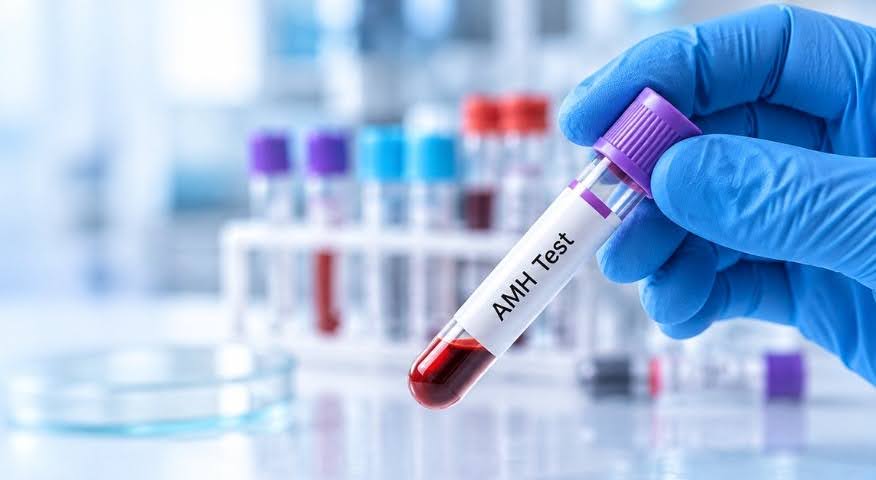
An AMH test for fertility estimates your ovarian reserve, the approximate number of eggs remaining in your ovaries. Unlike most other fertility hormones, AMH can be tested on any day of your cycle. A lower AMH level may suggest a reduced egg reserve, while a higher level could point to conditions like PCOS. A closer look at what different AMH ranges mean can help put your result in context.
According to the ASRM, AMH and antral follicle count are currently the preferred markers for evaluating ovarian reserve.
FSH (follicle-stimulating hormone)
FSH signals your ovaries to develop eggs. Elevated FSH levels on day 2 or 3 of your cycle may suggest the ovaries need more stimulation than usual, which can indicate declining reserve.
LH (luteinising hormone)
A surge in LH triggers ovulation. When measured alongside FSH, the ratio between the two can help identify hormonal patterns associated with conditions like PCOS.
Oestradiol (E2)
Oestradiol is measured alongside FSH on day 2 or 3 of the cycle. Abnormally high baseline oestradiol may mask an elevated FSH reading, so the two are typically interpreted together.
Progesterone
A progesterone test, usually done around day 21 of a 28-day cycle, helps confirm whether ovulation has occurred. If progesterone is low at that point, your doctor may explore whether ovulation is happening consistently or whether further support is needed.
TSH and prolactin
Thyroid function and prolactin levels are routinely checked because both can quietly affect ovulation and cycle regularity. Even when cycles appear normal, a subtle imbalance in either hormone may interfere with conception, which is why they are included in most standard panels.
Ultrasound-based assessments
An ultrasound fertility test adds a structural layer to the hormonal picture. While blood work tells you about hormones and egg reserve, an ultrasound lets your doctor see the ovaries and uterus directly.
Transvaginal ultrasound (TVS)
A transvaginal ultrasound is usually the first imaging step. A small probe is gently inserted to visualise the uterus and ovaries, checking for fibroids, polyps, ovarian cysts, and lining thickness. The scan takes about 10 to 15 minutes.
Antral follicle count (AFC)
Performed during the early days of your cycle (typically day 2 to 5), AFC counts the small resting follicles visible on each ovary. Along with AMH, AFC is one of the most reliable indicators of ovarian reserve and helps predict response to treatments like IVF.
Follicular monitoring
Follicular monitoring involves serial ultrasounds across your cycle to track whether a dominant follicle develops and whether ovulation occurs. Clinics commonly use this during timed intercourse or IUI cycles. A detailed look at follicle size and pregnancy can help you understand what your scan results may mean.
Ovarian reserve testing: putting it all together
An ovarian reserve test is not a single test but a combination of AMH, FSH, and AFC results interpreted together. No single number tells the full story.
Someone with a low AMH but a reasonable AFC and normal FSH may have a different outlook than someone with low values across all three markers. Age also matters, as a 28-year-old and a 39-year-old with the same AMH may face very different options. Normal-looking numbers do not always guarantee outcomes, which is why good hormone reports may not tell the full story. Your fertility specialist will look at these results alongside your history to create a personalised assessment.
Tubal patency tests: checking the fallopian tubes
Blocked or damaged fallopian tubes are a significant contributor to reproductive difficulty. Tubal evaluation is part of a standard fertility work-up, typically through one of these methods:
Hysterosalpingography (HSG)
HSG is an X-ray-based procedure where contrast dye is passed through the uterus and fallopian tubes to show whether the tubes are open. Some women find the procedure mildly uncomfortable, though the discomfort is usually brief.
Sonohysterography (SHG)
SHG is an ultrasound-based procedure where saline or foam is introduced into the uterus. Depending on the technique, SHG can help evaluate uterine cavity abnormalities and may also assess tubal patency, without any radiation exposure.
If tubal issues are found, your doctor may discuss whether surgical repair or assisted reproduction is more suitable.
Additional tests your doctor may recommend
Depending on your history and initial results, your doctor may suggest further tests as part of a comprehensive female fertility assessment in Mumbai.
- Genetic screening: sometimes recommended for women with recurrent pregnancy loss or a family history of genetic conditions.
- Infectious disease screening: standard before any assisted reproduction procedure, typically covering HIV, Hepatitis B and C, and rubella immunity.
What to expect during your visit
Walking into a fertility clinic in Mumbai for the first time can feel overwhelming, but the process is usually simpler than expected.
- Consultation: your doctor will review your menstrual history, medical records, lifestyle factors, and reproductive goals.
- Blood work: depending on where you are in your cycle, relevant hormones will be drawn. Most results come back within 24 to 48 hours.
- Ultrasound: a transvaginal scan is usually done on-site to evaluate your uterus, ovaries, and follicle count.
- Partner evaluation: if your partner is available, a male fertility assessment can often be completed the same day. A guide to semen analysis explains what those results mean.
After results are in, your doctor will explain each finding in context and outline next steps, which could range from lifestyle adjustments and cycle tracking to IUI or IVF.
When earlier testing may help
Female fertility tests do not need to wait until you are actively trying to conceive. Women planning to delay conception into their mid-to-late 30s, or those with a family history of early menopause, may benefit from baseline testing sooner.
Ovarian reserve tends to decline gradually from the early 30s and may drop more steeply after 35, according to ACOG guidance. A closer look at fertility after 35 can help separate what has genuinely changed from what has not. Early awareness opens up options like egg freezing or adjusted timelines while there is still time to act.
Your next step
Female fertility tests are not about labelling anyone. A thorough evaluation gives you information, and information gives you choices.
At Luma fertility, we believe fertility care should feel personal, not clinical. Our team offers a complete female fertility assessment under one roof, from blood work and ultrasound to advanced diagnostics, interpreted by specialists who explain every result in plain language. No cookie-cutter plans. Your timeline, your terms.
FAQs
What is the most important fertility blood test for women?
AMH is often considered one of the most useful single markers because it can be tested on any day of the cycle and gives a reliable estimate of ovarian reserve. Your doctor will typically order a panel that includes FSH, LH, oestradiol, TSH, and prolactin alongside AMH for a complete picture.
At what age should a woman consider getting her fertility tested?
Women in their early to mid-30s who plan to delay conception may benefit from a baseline assessment. If you are over 35 and have been trying for six months without conceiving, guidelines suggest seeking evaluation sooner rather than later.
Are female fertility tests painful?
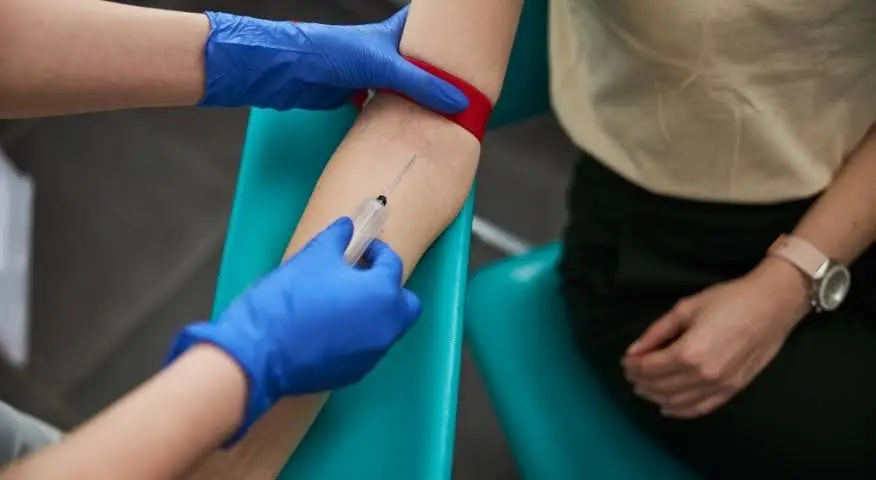
Most fertility blood tests for women involve a standard blood draw. A transvaginal ultrasound may feel slightly awkward, but is not typically painful. HSG can cause brief cramping that usually passes within a few minutes.
Can fertility tests tell me exactly when I will reach menopause?
No. Ovarian reserve tests can give an estimate of where your egg reserve currently stands, but they cannot predict the exact timing of menopause. AMH and AFC provide a snapshot, not a countdown.
Do I need to prepare or fast before fertility blood tests?
Most hormone tests for fertility do not require fasting. However, prolactin is ideally drawn as a morning sample, and some labs may recommend fasting for accuracy. Your clinic will give you specific instructions based on which tests are being ordered.
Can fertility test results change over time?
Yes. Hormonal levels and ovarian reserve naturally shift with age, health changes, and lifestyle factors. A single set of results is a snapshot, not a permanent verdict. Periodic re-evaluation may be helpful if you are planning to delay conception.
Sources
- WHO: 1 in 6 people globally affected by infertility (2023)
- ASRM: Fertility evaluation of infertile women, a committee opinion (2021)
- ASRM: Testing and interpreting measures of ovarian reserve, a committee opinion (2020)
- ACOG: Anticipatory counselling regarding ovarian-factor fertility decline (2025)