




Waiting to find out whether conception has happened can feel like one of the longest stretches of time. You have done everything right, timed everything carefully, and now your body is doing its part quietly, without giving you a clear signal either way. If you are reading this, you are probably somewhere in that two-week wait, paying close attention to every small change and wondering what it means.
That curiosity is completely valid, and you are not alone in feeling it. Searching for signs of sperm fertilizing an egg is one of the most common things people do during this window, and the question behind it is simple and deeply personal: did it work? Here is a guide built around clarity, so you know what your body may actually be telling you, and what is simply part of a normal cycle.
Key Takeaways
- Fertilisation happens at a microscopic level inside the fallopian tube and cannot be physically felt.
- Most sensations people attribute to fertilisation are actually ovulation pain or premenstrual symptoms.
- The earliest genuinely noticeable changes are implantation-related and may appear 6 to 12 days after ovulation.
- Gentle awareness of your body is helpful, but constant symptom-checking during the two-week wait may add stress without giving clear answers.
- A pregnancy test after a missed period remains the only reliable confirmation.
Can You Feel Fertilisation Happening?
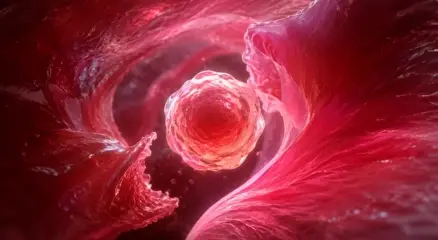
The direct answer is no. Fertilisation takes place when a single sperm cell penetrates the outer layer of the egg inside the fallopian tube. According to Cleveland Clinic, most people do not feel fertilisation because the entire event happens at a cellular level.
How fertilisation works silently
A sperm cell is microscopic, and the egg, while the largest cell in the human body, is still only about 0.1 millimetres across. When these two meet, the event is far too small for the body to register. Genetic material combining takes only a few hours, and because it all unfolds at a scale well below what your nerves can detect, no sensation is generated.
What actually happens at that moment
Once the sperm enters the egg, a structure called a zygote forms with 46 chromosomes. Over the next few days, the zygote divides into a cluster of cells and slowly travels down the fallopian tube towards the uterus. For a more detailed look at this process, how fertilisation happens covers each stage step by step.
Nothing physically feelable occurs at the moment of egg fertilisation in female reproductive biology. Any sensation you notice during this window is real, but it is more likely connected to ovulation or normal hormonal shifts rather than fertilisation itself.
What People Often Mistake for Fertilisation Symptoms
A large part of the confusion around symptoms of fertilisation in females comes from timing. Ovulation, fertilisation, and the lead-up to a period all happen within a narrow window, and the body sends overlapping signals during all three.
Ovulation pain (mittelschmerz)
About 20 percent of people experience a mild twinge or cramp on one side of the lower abdomen each cycle around the time of ovulation, according to Cleveland Clinic. The sensation is called mittelschmerz, and it is caused by the egg being released from the ovary, not by fertilisation. Because ovulation and fertilisation can happen within hours of each other, many people mistakenly attribute this cramp to conception, but in reality it happens before fertilisation is even possible.
Premenstrual symptoms (PMS)
Breast tenderness, bloating, mood changes, fatigue, and mild cramping are all standard PMS symptoms driven by rising progesterone in the second half of the menstrual cycle. These same symptoms are also listed across the internet as early “signs of fertilisation.” The overlap is significant, which is why these signs on their own may not give a clear answer during the two-week wait.
Post-intercourse sensations
Some people report feeling “different” immediately after intercourse, but the body does not produce any detectable hormonal response within minutes or hours. Any immediate sensation is far more likely a physical response to the act itself, or a reflection of the heightened awareness that naturally comes with trying to conceive.
A female fertility assessment can help map your cycle and ovulation patterns, which makes it easier to separate ovulation-related sensations from other changes.
Implantation Symptoms: What Is Actually Feelable, and When
So if the sensations above are not signs of fertilisation, what can you actually feel? The answer lies in what happens a few days later, during implantation.
After fertilisation, the zygote spends about five to six days dividing and travelling through the fallopian tube before reaching the uterus as a blastocyst, a cluster of roughly 100 cells. According to the National Library of Medicine (NIH), implantation typically occurs between 6 and 12 days after ovulation.
Implantation is the first stage where genuinely new physical signs may appear, because the body starts producing hCG (human chorionic gonadotropin) once the blastocyst embeds in the lining.
Implantation spotting
When the blastocyst burrows into the uterine wall, small blood vessels in the lining may break, causing a tiny amount of blood to pass through the cervix. Not everyone experiences this. According to the American College of Obstetricians and Gynecologists (ACOG), estimates vary, but roughly one in four to one in three people who conceive may notice any spotting at all.
Here is how implantation spotting typically differs from a period:
- Implantation spotting is usually pink or light brown in colour, rather than bright red.
- The flow is very light, much lighter than a regular period would be.
- Spotting generally lasts a few hours to one or two days and does not get heavier over time.
Changes in cervical discharge may also appear around this time. Early pregnancy egg white discharge explains what to look for and what is considered typical.
Mild cramping
Some people report a dull, pulling sensation in the lower abdomen around the time of implantation. These cramps tend to be milder than period cramps and do not escalate. Fertility treatments like IVF involve a similar implantation window, where mild cramping may occur after embryo transfer.
Breast tenderness
Rising progesterone and early hCG levels may cause breasts to feel sore, heavy, or more sensitive than usual. Some people also notice a slight darkening around the areola. However, progesterone also rises naturally before a period, so breast tenderness alone is not a reliable indicator of female fertilisation.
Fatigue
Progesterone has calming, sedative-like effects, and a sudden increase after implantation may leave you feeling unusually tired even with adequate sleep. According to PMC/NIH, progesterone plays a wide role in early reproductive physiology, including regulating energy and mood.
Nausea or food aversions
Some people notice a metallic taste or a sudden aversion to certain foods and smells shortly after implantation. These changes are linked to rising hCG levels and typically become stronger in the weeks that follow.
What Matters More Than Symptom-Spotting
With so many possible signs to watch for, it can be tempting to analyse every small change. However, the two-week wait is one of the most emotionally charged parts of trying to conceive, and checking every sensation against a list of “early signs” often adds anxiety without giving reliable answers.
What the body is still preparing at this stage
Before implantation, progesterone rises in every cycle, whether conception has occurred or not. The symptoms it causes, like fatigue, breast soreness, and mood shifts, are identical regardless of whether an egg has been fertilised. Until hCG enters the picture after implantation, there is no clinically detectable hormonal difference between a cycle that leads to conception and one that does not.
Why a test gives better clarity than a checklist
Reading extensive symptom lists online and matching them to what you feel can create a confirmation bias. Every body responds differently, and many people who successfully conceive report no symptoms at all during the two-week wait. Equally, every symptom on a “fertilisation signs” list can show up as part of a normal menstrual cycle, which is why a pregnancy test remains the most trustworthy step.
What to do instead
Rather than tracking every sensation, focusing on overall wellbeing tends to be more helpful. Adequate sleep, balanced nutrition, and managing day-to-day stress support reproductive health more than symptom analysis does. A pre-conception journey can help structure this time around wellness rather than worry.
The only reliable confirmation of conception is a pregnancy test. A home urine test taken after a missed period (typically around 14 days after ovulation) detects hCG with high accuracy, and a blood test through a healthcare provider can detect it slightly earlier. A male fertility assessment alongside a female evaluation can also give couples a fuller picture if conception has not occurred after several months.
Conclusion
Fertilisation itself is a silent, microscopic event, and that is completely normal. The earliest genuinely feelable changes are implantation-related and may appear 6 to 12 days after ovulation, but not everyone experiences them, and having no symptoms is equally normal.
At Luma fertility, we understand how the uncertainty of the two-week wait can weigh on you. If you would like clarity about your cycle, your ovulation patterns, or your overall reproductive health, our specialists can guide you through a thorough fertility assessment tailored to your situation, so you are working with real information rather than guesswork.
Note: This content is for educational and informational purposes only. Please consult a qualified medical professional for personalised advice. This is not a substitute for medical guidance.
Frequently Asked Questions
Q. Can you feel the exact moment when a sperm fertilises an egg?
No. Fertilisation happens at a cellular level inside the fallopian tube, and the process does not produce any physical sensation the body can detect. According to Cleveland Clinic, most people do not feel fertilisation occurring.
Q. Is cramping a sign of fertilisation?
Cramping around the time of ovulation is more likely mittelschmerz (ovulation pain) or a normal premenstrual symptom. Mild cramping that appears 6 to 12 days after ovulation may be related to implantation, but even that is not definitive and occurs in only some people.
Q. How soon can you feel pregnancy symptoms?
Most genuinely pregnancy-related symptoms appear after implantation, which typically happens 6 to 12 days after ovulation. Before implantation, the hormonal profile of a conception cycle and a non-conception cycle is essentially the same, so any symptoms felt before that point are unlikely to be pregnancy-specific.
Q. How is implantation spotting different from a period?
Implantation spotting is typically light pink or brown, very minimal in flow, and lasts only a few hours to two days. Period bleeding is usually heavier, bright red, and increases in flow over the first day or two.
Q. Can symptoms of fertilisation feel the same as PMS?
Yes, the overlap is significant. Cramping, breast soreness, mood changes, and fatigue are common to both PMS and early implantation. Tracking your cycle consistently and noting the timing of symptoms may help distinguish between the two, but a pregnancy test is the only reliable confirmation.
Q. Should couples seek medical advice if they do not conceive after several months?
Couples who have been trying for 12 months without conceiving, or 6 months for those over 35, may benefit from a professional evaluation, as recommended by ACOG and ASRM. A fertility specialist can assess hormonal balance, ovulation patterns, and sperm health to identify any underlying factors.
Sources
- Cleveland Clinic. Conception: Fertilization, Timeline and How To Get Pregnant. https://my.clevelandclinic.org/health/articles/11585-conception
- Oliver R, Basit H. Embryology, Fertilization. StatPearls, National Library of Medicine (NIH). https://www.ncbi.nlm.nih.gov/books/NBK542186/
- Kolatorova L, et al. Progesterone: A Steroid with Wide Range of Effects in Physiology as Well as Human Medicine. PMC/NIH, 2022. https://pmc.ncbi.nlm.nih.gov/articles/PMC9322133/
- Norwitz ER, Schust DJ, Fisher SJ. Implantation and the survival of early pregnancy. The New England Journal of Medicine, 2001. https://pubmed.ncbi.nlm.nih.gov/11794174/
- Pascual ZN, Langaker MD. Physiology, Pregnancy. StatPearls, National Library of Medicine (NIH). https://www.ncbi.nlm.nih.gov/books/NBK559304/