




Maybe you have been scrolling through articles late at night, trying to figure out if your age changes your chances. Maybe someone said something at a family gathering, or a friend’s journey made you start thinking about your own. Whatever brought you here, the fact that you are looking for real answers says a lot, and you deserve information that is honest without being overwhelming.
Age and fertility can feel like a heavy topic, partly because so much of what is out there is either too alarming or too vague. Neither helps when you are trying to make real decisions about your life. A female fertility age chart can bring some clarity to the picture, breaking down what typically happens at each stage so you can plan with confidence, not confusion.
Key Takeaways
- Peak fertility age in female reproductive years is generally in the mid-to-late 20s.
- Fertility begins a gradual decline after 30 and drops more noticeably after 35.
- Egg quantity and egg quality both decrease with age, but quality tends to matter more for outcomes.
- Knowing your female fertile window and cycle patterns can help with planning at any age.
- Egg freezing outcomes tend to be better when done earlier, making the late 20s to early 30s a practical window to consider.
- Age is one factor among many. Lifestyle, hormonal health, and underlying conditions all play a role.
How Does Female Fertility Change With Age?
Age is one of the most significant factors in female fertility, but the changes happen gradually, not overnight. A female fertility by age breakdown helps put things into perspective.
How Egg Supply Works
Women are born with a fixed number of eggs, roughly 1 to 2 million at birth. Unlike sperm, eggs do not regenerate. According to the American College of Obstetricians and Gynecologists (ACOG), by puberty, around 300,000 to 500,000 eggs remain. Each menstrual cycle, multiple eggs are used up even though only one is typically released for fertilisation, so the egg reserve naturally decreases every month.
Egg Quality Matters as Much as Count
Egg quality, meaning the genetic and cellular health of each egg, also changes over time. According to data reviewed by the American Society for Reproductive Medicine (ASRM), the rate of chromosomal abnormalities in eggs can increase from roughly 20% at age 29 to nearly 60% by age 40. Healthy, high-quality eggs have a stronger chance of successful fertilisation and embryo development, which is why understanding egg quality alongside egg count matters for planning.
A Quick Overview by Decade
For most women, the peak fertility age in female reproductive life falls in the mid-to-late 20s. A study in the American Journal of Obstetrics and Gynecology (Wesselink et al., 2017) found that couples where the woman was aged 25 to 27 had the highest conception rate, with about 79% conceiving within a year.
Female fertility after 30 does not drop off a cliff. Data from the same study suggests fertility stays relatively stable between ages 28 and 33. After 35, both egg quantity and quality decline more noticeably, and by 40, natural conception per cycle drops to roughly 5 to 10%.
Female Fertility by Age Chart
A female fertility age chart helps visualise the pattern at a glance. The figures below are general estimates based on data from ACOG and ASRM, and individual fertility can vary based on health, lifestyle, genetics, and other personal factors.
| Age Range | Chance of Conception (Per Cycle) | Egg Quality | Miscarriage Risk | Outlook |
|---|---|---|---|---|
| Under 25 | ~25 to 30% | Excellent | Low | Optimal window |
| 25 to 29 | ~20 to 25% | Very good | Low | High fertility |
| 30 to 34 | ~15 to 20% | Good | Moderate | Gradual decline |
| 35 to 37 | ~10 to 15% | Fair | Increased | Noticeable decline |
| 38 to 40 | ~5 to 10% | Variable | High | Options available |
| 41 to 43 | ~3 to 5% | Lower | Very high | May benefit from support |
| 44+ | ~1 to 2% | Significantly lower | Very high | Assisted options often helpful |
A note on the chart: A female fertility cycle chart like the one above offers general patterns, not personal predictions. Ovarian reserve, ovulation regularity, sperm health, and overall reproductive health also influence outcomes.
Why Fertility Declines Faster After 35
After 35, the pace of fertility decline picks up. Understanding why can help you make better-informed decisions, especially around timing and options like egg freezing.
How Egg Reserve Changes After 35
According to research by Faddy & Gosden (1995), the pace of egg reserve decline tends to increase after 35. Ovarian reserve decreases steadily from puberty onward, but the rate of change becomes more noticeable in the mid-to-late 30s, which is why having this information early gives you more time to explore your options.
Egg Quality Changes
As eggs age, the risk of chromosomal errors during cell division increases. Chromosomally healthy eggs have a stronger chance of fertilising successfully, developing into viable embryos, and leading to a healthy pregnancy, but the proportion of these healthy eggs gradually decreases with age. For context, ASRM data indicates that by age 40, roughly 60% or more of eggs may carry chromosomal changes, compared to about 35% at age 35.
Hormonal Shifts
Hormones play a central role in regulating your menstrual cycle and ovulation. In the late 30s and 40s, oestrogen levels may begin to fluctuate and FSH (follicle-stimulating hormone) levels tend to rise. These shifts can lead to irregular cycles or missed ovulation, which makes it harder to predict your fertile window. If you notice your cycle becoming less regular, a hormonal assessment can help clarify what is happening.
What 35 Means for Egg Freezing
Because egg quality matters more than count for outcomes, the late 20s to early 30s are often considered the most practical window for egg freezing. Eggs frozen at a younger age tend to be more genetically stable, which generally means fewer cycles and better outcomes when used later. Waiting until after 35 does not rule egg freezing out, but more cycles may be needed to reach the same result.
On a related note, NICE recommends that women over 35 who have not conceived after 6 months of regular, unprotected intercourse should consider seeking a fertility assessment. Getting that baseline view early helps you make decisions based on your actual biology rather than general statistics.
Understanding Your Fertile Window
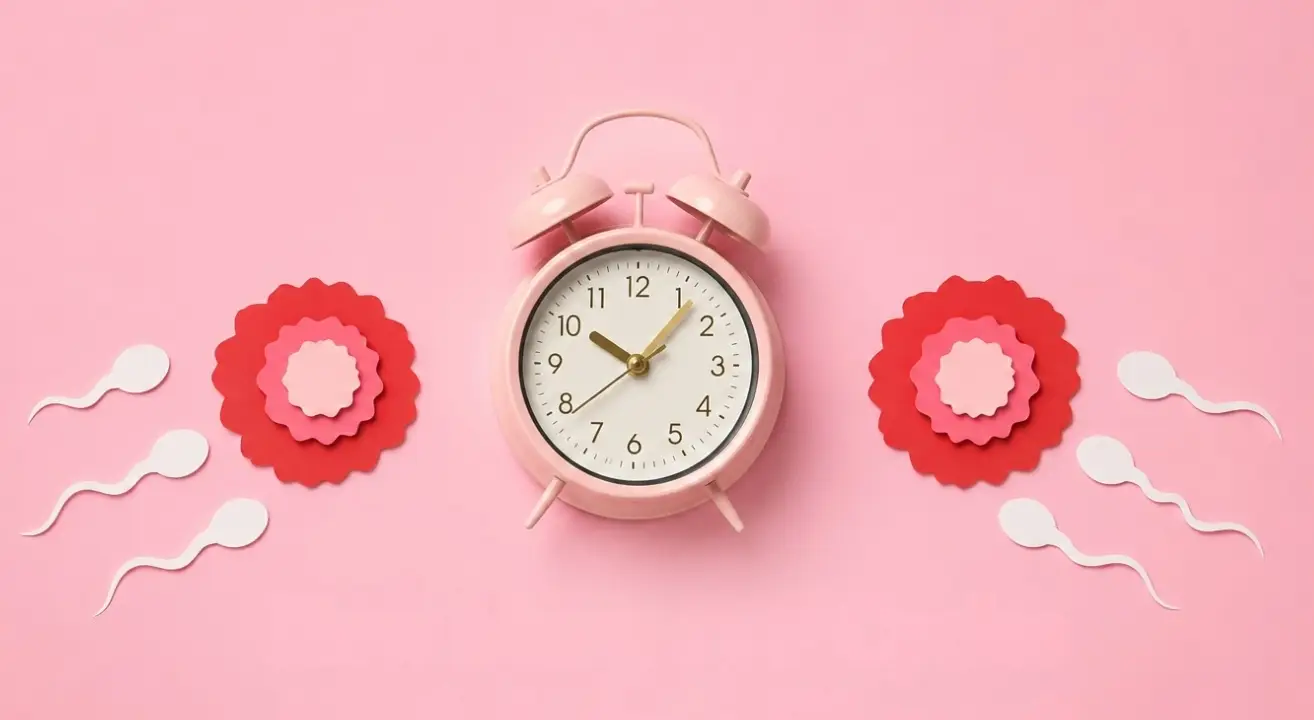
Regardless of age, knowing when you are most likely to conceive each month can make a meaningful difference. The female fertile window is a short stretch in every cycle when conception is possible.
When Does the Fertile Window Occur?
Ovulation typically happens around 12 to 16 days before the start of the next period. Because sperm can survive inside the reproductive tract for up to five days, the female most fertile days in any cycle are the five days leading up to ovulation and the day of ovulation itself.
How to Track Your Fertile Window
A few simple methods can help identify your most fertile days:
- Ovulation predictor kits (OPKs): These detect a surge in luteinising hormone (LH) that typically happens 24 to 36 hours before ovulation.
- Basal body temperature (BBT): Resting temperature rises slightly after ovulation. Tracking it daily can confirm ovulation patterns over a few cycles.
- Cervical mucus monitoring: Around ovulation, cervical mucus often becomes clear, slippery, and stretchy.
Does the Fertile Window Change With Age?
The window itself does not shrink with age. What changes is the quality of the egg released during that window. As you get older, the proportion of chromosomally healthy eggs gradually decreases, which is why combining cycle awareness with a broader fertility plan can be especially helpful in your 30s and beyond.
What You Can Do: Testing and Options
Knowing how female fertility changes with age is only useful if it helps you take the right steps at the right time, whether you are planning ahead or already trying to conceive.
Get a Fertility Assessment
An AMH blood test measures anti-Mullerian hormone levels, giving an estimate of your remaining egg supply. Combined with an antral follicle count on ultrasound, an assessment helps you understand your ovarian reserve and plan accordingly. A male fertility assessment for your partner is equally important, since sperm health accounts for a significant share of conception challenges.
Consider Egg Freezing
For women who want to preserve their options, egg freezing stores eggs at their current quality for future use. Freezing in the late 20s or early 30s generally means fewer cycles and better outcomes later. If you are over 35 and considering this option, understanding what to expect at that stage can help you plan realistically.
Support Your Overall Health
Lifestyle factors quietly influence egg quality and hormonal balance. A few habits that may support your fertility over time include:
- Eating a balanced, nutrient-rich diet
- Getting regular physical activity
- Managing stress through rest, movement, or mindfulness
- Avoiding smoking and limiting alcohol
- Getting adequate, consistent sleep
Seek Support Early
If you are over 35 and have been trying to conceive for 6 months without success, or under 35 and trying for a year, a conversation with a fertility specialist can help identify next steps. Starting a pre-conception journey sooner rather than later can make a meaningful difference.
Conclusion
Age does influence fertility, but awareness and timely action can change outcomes. A female fertility age chart is a helpful starting point, but your personal fertility picture depends on much more than age alone.
At Luma fertility, we understand that every person’s timeline is different, and so is every fertility journey. Our team works with you to create a personalised plan, whether you are exploring egg freezing, getting a first fertility assessment, or ready to start treatment. No cookie-cutter plans, just care built around you.
Get a free 15-minute clarity call with our fertility care specialist →
Disclaimer: This content is for educational and informational purposes only. It is not a substitute for professional medical advice, diagnosis, or treatment. Please consult a qualified fertility specialist for guidance tailored to your individual situation.
Frequently Asked Questions
Q. At what age does female fertility start declining?
Fertility generally begins to decline gradually in the early 30s. After 35, the decline becomes more noticeable due to changes in egg quantity and quality. After 40, natural conception rates are lower, but fertility treatments and timely planning can open up additional paths.
Q. What are the female’s most fertile days in a cycle?
The most fertile days are the five days leading up to ovulation and the day of ovulation itself. Ovulation usually occurs around 12 to 16 days before the next period. Ovulation predictor kits and basal body temperature tracking can help identify these days.
Q. Can you get pregnant naturally after 40?
Yes, some women do conceive naturally after 40. The chance of conception per cycle is lower at this stage, generally around 5 to 10%, and pregnancy risks do increase with age. Working with a fertility specialist can help identify the best approach for your situation. ACOG recommends that women over 40 seek a fertility evaluation before they start trying, rather than waiting.
Q. Does egg freezing stop the biological clock?
Egg freezing preserves eggs at the quality they are on the day they are frozen, so eggs frozen at 30 will reflect the quality of a 30-year-old’s eggs, even if used years later. While freezing does not guarantee a future pregnancy, it can meaningfully improve the odds compared to relying on older eggs at the time of conception.
Q. What is the difference between egg quality and egg quantity?
Egg quantity (ovarian reserve) refers to the number of eggs remaining in the ovaries. Egg quality refers to the genetic and cellular health of those eggs. Both decline with age, but egg quality often has a greater impact on outcomes than count alone.
Q. How does age affect IVF success rates?
IVF success rates are generally higher for younger women. According to ACOG, success rates for women under 35 are significantly better than for those over 40. Using younger frozen eggs or donor eggs can improve outcomes at an advanced reproductive age.
Sources
- American College of Obstetricians and Gynecologists (ACOG). (2024). How Aging Affects Fertility and Pregnancy After Age 35. https://www.acog.org/womens-health/faqs/having-a-baby-after-age-35-how-aging-affects-fertility-and-pregnancy
- Practice Committee of the American Society for Reproductive Medicine (ASRM). (2022). Optimizing natural fertility: a committee opinion. Fertility and Sterility, 117(1), 53 to 63. https://integration.asrm.org/globalassets/_asrm/practice-guidance/practice-guidelines/pdf/optimizing_natural_fertility.pdf
- Wesselink, A. K., Rothman, K. J., Hatch, E. E., et al. (2017). Age and fecundability in a North American preconception cohort study. American Journal of Obstetrics and Gynecology, 217(6), 667.e1 to 667.e8. https://www.ncbi.nlm.nih.gov/pmc/articles/PMC5712257/
- Faddy, M. J. & Gosden, R. G. (1995). A mathematical model of follicle dynamics in the human ovary. Human Reproduction, 10(4), 770 to 775. https://pubmed.ncbi.nlm.nih.gov/7650119/
- George, K. & Kamath, M. S. (2010). Fertility and age. Journal of Human Reproductive Sciences, 3(3), 121 to 123. https://www.ncbi.nlm.nih.gov/pmc/articles/PMC3017326/
- National Institute for Health and Care Excellence (NICE). (2017). Fertility problems: assessment and treatment. Clinical guideline CG156. https://www.nice.org.uk/guidance/cg156