




Wanting to understand your own body, especially when you are trying to conceive or planning for the future, is completely natural. And yet, so many people feel hesitant to ask the basic questions. What actually happens when a sperm meets an egg? Where does it happen? Why does timing matter so much? If you have found yourself searching for clear answers without the medical jargon, you are in the right place.
The fertilization process in humans involves a precise sequence of biological events, from the release of the egg to its eventual implantation in the uterus. Each step needs to happen at the right time and in the right place, and understanding how this works can replace uncertainty with confidence.
Key Takeaways
- Fertilization typically takes place in the fallopian tube, not the uterus.
- An egg remains viable for roughly 12 to 24 hours after ovulation.
- Sperm can survive inside the female reproductive tract for up to 5 days.
- Typically, only one sperm can successfully enter the egg; the egg blocks others after the first one gets through.
- After fertilization, the resulting cell (called a zygote) travels to the uterus and may implant in the uterine lining within roughly 6 to 12 days.
- Fertilization is one important step toward pregnancy, and successful implantation is the next. Understanding both can help with planning.
What Is Fertilization?
Fertilization is the moment a sperm cell meets and joins with an egg cell, combining genetic material from both into a single new cell. The sperm contributes 23 chromosomes, and the egg contributes another 23, forming a cell with 46 chromosomes, the complete set needed for human development.
Why does fertilization matter?
Whether it occurs naturally inside the body or in a laboratory through treatments like IVF, the biological process remains the same: one sperm fuses with one egg, and a new cell called a zygote is formed. Put simply, the process of fertilization in human beings is the union of two cells into one, carrying a full set of genetic instructions needed to begin development.
Where Does Fertilization Happen in the Body?
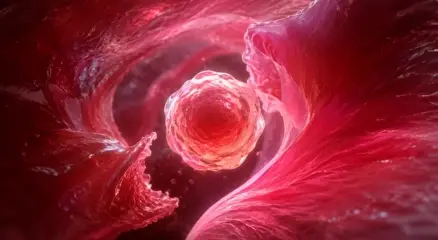
Many people assume fertilization takes place in the uterus, but that is not typically the case. The site of fertilization in females is the fallopian tube, specifically a section called the ampulla, the wider outer portion closest to the ovary.
Why the fallopian tube?
The ampulla provides the right environment for the sperm and egg fertilization process. According to a review published in the National Library of Medicine (PMC), the inner lining of the fallopian tube secretes fluids that nourish both gametes, and the tube plays an active role in supporting fertilization, not just acting as a passageway.
So, where does fertilization occur in humans? Most commonly, the answer is the ampullary region of the fallopian tube. Fertilization in the female reproductive system depends on this location being healthy and unblocked.
The Fertilization Process, Step by Step
Breaking the process into individual stages makes it easier to follow. Here is what happens during each one.
Ovulation: the egg is released
Around day 14 of a typical 28-day cycle, a surge in luteinising hormone (LH) signals one of the ovaries to release a mature egg. The egg is surrounded by protective cells called cumulus cells. Once released, tiny finger-like structures at the end of the fallopian tube, called fimbriae, sweep the egg into the tube.
According to Cleveland Clinic, the egg remains viable for about 12 to 24 hours after ovulation, which is why timing plays such an important role in conception.
A female fertility assessment can help evaluate whether ovulation is occurring regularly and if the hormonal environment supports healthy egg release.
Sperm travel through the reproductive tract
During intercourse, millions of sperm enter the vagina and travel through the cervix, into the uterus, and up into the fallopian tubes. The body naturally filters sperm along the way, so that the healthiest and most capable sperm are the ones that reach the egg.
Along the way, sperm go through a process called capacitation, where chemical changes in the sperm’s outer membrane prepare the sperm to penetrate the egg. Capacitation is one of the body’s built-in steps to help ensure fertilization happens effectively.
Sperm can survive inside the reproductive tract for up to 5 days, according to the Cleveland Clinic. So if intercourse happens a few days before ovulation, sperm may already be waiting in the fallopian tube when the egg arrives. Because sperm health plays a significant role in this journey, a male fertility assessment can evaluate sperm count, motility, and overall quality.
Sperm penetrates the egg
Once the sperm reaches the egg in the fallopian tube, the actual process of joining begins. The egg is surrounded by two protective barriers:
- Cumulus cells: A layer of cells surrounding the egg. Sperm release enzymes to break through these cells.
- Zona pellucida: A thick outer shell made of glycoproteins. A sperm cell needs to bind to receptors on this shell and release more enzymes (the acrosome reaction) to get through.
Once a single sperm breaks through and fuses with the egg’s outer membrane, the sperm releases its 23 chromosomes into the egg. The moment one sperm enters, the egg generally triggers a chemical reaction that hardens the zona pellucida and blocks other sperm. According to StatPearls (NIH), blocking additional sperm (the polyspermy block) is essential for normal fertilization.
Genetic material combines to form a zygote
The 23 chromosomes from the sperm and 23 from the egg each form a structure called a pronucleus. The two pronuclei move toward each other, their membranes break down, and the chromosomes intermingle. A single cell with 46 chromosomes, called a zygote, has now formed. At this point, fertilization is complete.
How Long Does Fertilization Take?
The timing of fertilization depends on multiple factors.
The fertilization window
After ovulation, the egg is viable for roughly 12 to 24 hours, while sperm can remain active in the reproductive tract for up to 5 days. So the window in which fertilization can happen may extend to about 6 days total.
The act of fertilization itself
Once sperm reaches the egg, penetration can happen within minutes. However, the complete process of genetic material merging and the zygote fully forming may take several hours. So while the moment of sperm-egg contact is quick, the full biological event unfolds gradually.
What Happens After Fertilization?
Fertilization is one important milestone, and the steps that follow bring the process closer to pregnancy.
Cell division and travel to the uterus
Once the zygote is formed, cell division begins almost immediately. The zygote divides into 2 cells, then 4, then 8, and so on while travelling down the fallopian tube. According to Cleveland Clinic, about a week after fertilization, the cluster (now roughly 100 cells) reaches the uterus and is called a blastocyst. At this stage, the blastocyst has two distinct parts:
- Inner cell mass: The group of cells that may develop into a foetus.
- Trophoblast: The outer layer that may develop into part of the placenta.
Implantation
The blastocyst attaches itself to the lining of the uterus (the endometrium). Once attached, the trophoblast burrows into the uterine lining, establishing a connection with the blood supply. Hormonal signals then tell the body that a pregnancy has begun.
Implantation depends on several factors working together, including hormonal balance, embryo quality, and uterine lining health. When these conditions align well, the chances of successful implantation improve. A fertility specialist can help assess and support these factors when needed.
For those exploring fertility treatments, IVF allows fertilization to happen in a lab setting, where a specialist retrieves eggs and combines them with sperm before transferring the resulting embryos back into the uterus. Similarly, women considering egg freezing may benefit from understanding these steps, since thawing and fertilising frozen eggs follows the same biological principles.
When to Talk to a Fertility Specialist
Understanding the fertilization process is a useful starting point, but every person’s biology is different. Speaking with a fertility specialist can help if:
- You have been trying to conceive for 12 months (or 6 months if you are over 35) and are looking for guidance.
- Your menstrual cycles are irregular or absent, which may suggest ovulation is not happening consistently.
- You or your partner have a known condition that could affect reproductive health.
- You want a clearer picture of your fertility before you start trying.
A pre-conception journey assessment can identify relevant factors early, whether that means natural conception support, lifestyle adjustments, or exploring treatments.
Conclusion
Each step of fertilization depends on timing, biology, and overall reproductive health. Understanding the process can bring clarity, whether you are trying to conceive naturally or exploring fertility treatments.
At Luma fertility, we take the time to understand your unique situation and create a personalised plan that reflects your goals. Our specialists, led by Dr. Radhika Sheth, are here to walk you through every step with care and clarity.
Trying to conceive? Book a consultation to start with a personalised conversation about your fertility.
Note: This blog is for educational purposes only and is not a substitute for medical advice. Please consult a qualified fertility specialist for guidance specific to your situation.
Frequently Asked Questions
Q. Can fertilization happen without intercourse?
Yes. Fertility treatments like IUI (intrauterine insemination) and IVF (in vitro fertilization) allow fertilization to happen with medical assistance. In IVF, eggs and sperm are combined in a laboratory, and the resulting embryos are placed into the uterus.
Q. How soon after ovulation does fertilization occur?
An egg remains viable for about 12 to 24 hours after ovulation. If sperm is already present in the fallopian tube, fertilization can happen within minutes to hours of sperm reaching the egg. Sperm can survive in the reproductive tract for up to 5 days, so intercourse before ovulation can also lead to fertilization.
Q. Does fertilization always lead to pregnancy?
Fertilization is one step in the process. For a pregnancy to begin, the fertilised egg also needs to travel to the uterus, develop into a blastocyst, and implant in the uterine lining. Several factors influence implantation, including embryo quality, hormonal balance, and uterine lining health. When these factors are well-supported, the chances of a successful outcome improve.
Q. Where exactly does fertilization take place?
Fertilization typically takes place in the ampulla, the outer section of the fallopian tube closest to the ovary. The fallopian tube provides the right environment for sperm and egg to meet. Fertilization does not usually happen in the uterus.
Q. How many sperm actually reach the egg?
Out of the millions of sperm released, the body’s natural filtering process means only a few hundred may reach the egg in the fallopian tube. Typically, only one sperm can successfully penetrate the egg, and once it does, the egg blocks others from getting through.
Q. Does age affect the fertilization process?
Age can influence egg quality, ovarian reserve, and hormonal balance, all of which play a role in whether fertilization happens successfully. While age is one factor, a thorough fertility assessment can help identify your individual situation and guide appropriate next steps.
Sources
- Cleveland Clinic. “Conception: Fertilization, Timeline & How To Get Pregnant.” Last updated May 2026. https://my.clevelandclinic.org/health/articles/11585-conception
- Oliver R, Basit H. “Embryology, Fertilization.” StatPearls [Internet]. National Library of Medicine (NIH). Last updated April 2023. https://www.ncbi.nlm.nih.gov/books/NBK542186/
- Coy P, Garcia-Vázquez FA, Visconti PE, Avilés M. “Roles of the oviduct in mammalian fertilization.” Reproduction. PMC/NIH. https://pmc.ncbi.nlm.nih.gov/articles/PMC4022750/