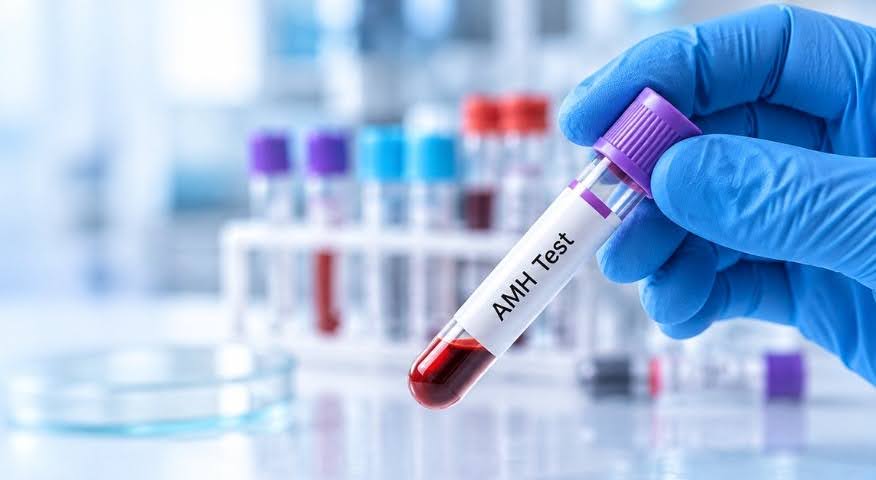





Women who receive a low AMH (Anti-Müllerian Hormone) diagnosis in their 20s or 30s experience emotional distress and feel confused. Your youth and good health, along with your current non-conception status should not create any fertility worries but they now exist. The actual situation shows that low AMH results do not function as a medical diagnosis or the start of a time limit. The information functions as a guiding piece for developing better fertility strategies, which become important when deciding between IVF treatment and fertility preservation methods. It is known that young women who experience low AMH IVF success via evidence-based methods.
Let’s break down what young low AMH fertility really means, how it affects low AMH IVF success, and what treatment pathways work best in India today.
What Does Low AMH Mean in Younger Women?
The hormone AMH (Anti-Müllerian Hormone) measures the ovarian reserve, which indicates how many eggs a woman’s ovaries still have.
Younger women test results that show low AMH levels:
- People who test positive for this condition have lower egg counts but their eggs remain healthy.
- The woman will experience her pregnancy period for a shorter time than most people will.
AMH testing does not provide monthly predictions for natural conception nor does it show your ability to conceive, instead it supports doctors in their preparation process.
Check Out: Amh Levels Explained What Is Normal Low And Misleading

Why Low AMH Feels More Confusing at a Young Age
Young women, especially in the 20-30 age group, with low AMH results experience difficulty accepting this because it is unexpected and when cycles are regular they wonder how can AMH be low.
Moreover, they now have challenges in front of them:
- They feel pressured to make immediate choices
- IVF feels the only choice
The test results themselves do not cause distress for most women, but they experience anxiety from the lack of clear instructions that follow.
Read More: Amh Isnt Destiny Interpreting Amh With Afc And Age
Does Low AMH Affect IVF Success in Young Women?
This situation requires a detailed examination because it contains multiple factors. IVF with low AMH success rates depend heavily on age.
In younger women:
- IVF cycles may yield fewer eggs
- But fertilization, embryo development, and implantation rates are often comparable to women with normal AMH
IVF success depends on:
- Age
- Egg and embryo quality
- Personalized stimulation protocols
- Lab expertise
At centres experienced with IVF with low AMH in India, outcomes are often better than expected when treatment is individualized.
Check Out: Ivf Success Rates By Age Diagnosis Genetics
Egg Quantity vs Egg Quality: Why Age Still Matters
Age remains an important factor in determining the relationship between egg quantity and egg quality. The distinction between various fertility levels is essential for understanding young women who have low AMH levels. This distinction is critical in understanding young low AMH fertility.
- Egg quantity is reflected by AMH
- Egg quality is driven mainly by age
A 28-year-old with low AMH often still produces genetically healthy eggs, while a 40-year-old with normal AMH may struggle due to declining egg quality. This is why age can sometimes offset the challenges of poor ovarian reserve treatment.
Poor Ovarian Reserve: Treatment Options That Actually Help
Effective poor ovarian reserve treatment focuses on optimizing outcomes—not overstimulation. Approaches that may help include:
- Individualized stimulation protocols
- Mild or antagonist IVF cycles
- Multiple egg retrievals with cumulative embryo banking
- Strategic use of supplements and cycle timing
IVF With Low AMH in India: What Strategy Matters Most
Access to IVF with low AMH in India is expanding, but outcomes vary widely based on strategy. What matters most is:
- Experience with low-reserve patients
- Realistic counselling (not just optimistic promises)
- Strong embryology labs
- Clear discussion of alternatives, including fertility preservation
Young women, especially, benefit from a measured approach rather than rushed or overly aggressive cycles.
When to Consider IVF, Egg Freezing, or Expectant Management
There is no single path for all women with low AMH. The selection of either IVF or egg freezing or expectant management should result from evaluating the individual’s age and ovarian reserve and relationship status and personal timing objectives.
The method of expectant management applies to people who possess time and who lack identified fertility problems, while egg freezing functions as a biological clock “insurance” option for single women who want to postpone their pregnancies, and IVF serves as a treatment for couples and individuals who experience current infertility or plan to use existing sperm samples for embryo creation.
| Feature | Expectant Management | Egg Freezing | IVF |
| Purpose | Immediate pregnancy | Future pregnancy option | Immediate or near-term pregnancy |
| Ideal Age | Under 35 | Late 20s to early 30s | Varies (success declines >35) |
| Sperm Required | Yes | No | Yes |
| Cost | Low | High | Very High |
| Best For | Proactive, young, no issues | Delaying for personal/med reasons | Infertility, couples |
- IVF may be advised when pregnancy is the immediate goal and infertility could be a challenge
- Egg or embryo freezing can preserve fertility when motherhood is planned later
- Expectant management means actively trying to conceive without immediate medical intervention.
Check Out: Should I Freeze My Eggs A Guide To Timing It Right
Why Individualized IVF Planning Matters With Low AMH
Low AMH responds poorly to “standard protocol” IVF. Individualized planning considers:
- Hormonal patterns beyond AMH
- Previous cycle responses (if any)
- Emotional bandwidth and long-term goals
This tailored approach improves decision-making and reduces burnout—particularly in young patients navigating uncertainty.
Read More: Understanding The Amh Test What It Measures And Why It Matters
How Luma fertility Approaches Low AMH in Young Women
At the Luma fertility, low AMH is viewed as a planning variable, not a limitation. The approach emphasizes:
- Early, evidence-led counselling
- Thoughtful cycle design rather than protocol-driven care
- Fertility preservation discussions when appropriate
- Emotional clarity alongside medical precision
This ensures patients understand not just what the numbers mean—but how to move forward with confidence.
Low AMH Is Information, Not a Verdict
Low AMH does not define your fertility. It informs it. For young women especially, early awareness creates opportunity, whether that means timely IVF, fertility preservation, or simply peace of mind through better planning.
With the right strategy, support, and guidance from Luma Fertility’s embryologists, low AMH can become a starting point rather than an ending. Speak with our specialists to explore personalised IVF treatment in Mumbai based on your fertility needs.
FAQs
Q. Can young women with low AMH still have IVF success?
Yes. In younger women, low AMH does not preclude IVF success, as egg quality is often age-appropriate despite a reduced ovarian reserve.
Q. Does low AMH mean poor egg quality?
No. AMH reflects egg quantity rather than egg quality, which is primarily influenced by age.
Q. What is the best treatment for poor ovarian reserve in young women?
Management is based on individualized treatment planning, focusing on optimizing ovarian response and reproductive timing.
Q. Is IVF the only option for young women with low AMH?
Not necessarily. Depending on clinical context and reproductive goals, options may include observation, fertility preservation, or IVF.
Q. How does IVF with low AMH work in India?
IVF for low AMH in India involves tailored stimulation protocols, advanced embryology support, and evidence-based clinical counselling.